
Is Synthetic Grass Hot in the Sun? Colorado is HOT!
Call us at (970) 939-3833

With rising temperatures, especially in places like Colorado that receive a lot of sunlight, more and more homeowners are searching for heat-resistant, low-maintenance landscaping choices. Because of its resilience, visual appeal, and low care needs, synthetic grass has become a popular option. But a typical question is: Is synthetic grass hot in the sun? Colorado experiences extremely hot summers, so this is a legitimate subject that requires thorough investigation.
The Allure of Artificial Grass
There are many benefits to artificial turf, also referred to as synthetic grass. It requires no fertilizer, mowing, or watering to stay lush and green all year, making it a sustainable choice for drought-prone locations. It’s perfect for homes with pets or kids because it can tolerate heavy use and is pest-resistant. These advantages are especially alluring in Colorado, where conserving water is essential and temperatures can reach extremely high levels.
The Problem of Heat
Synthetic grass has many benefits, but one of the main disadvantages is that it absorbs and holds onto heat easily. In contrast to real grass, which cools the area through transpiration, synthetic grass can get noticeably hotter under bright sunlight. This is the case because manufacturers use materials like polyethylene and polypropylene, forms of plastic, to make fake grass. These substances have a rapid heat-up and long heat-retention rate.
Research Results
Is synthetic grass hot in the sun? According to studies, synthetic grass can have a surface temperature of up to 150°F (65°C) on a hot day, which is far hotter than natural grass. For example, Penn State Center for Sports Surface Research research discovered that, in comparable circumstances, synthetic turf can be 35–55°F (2–13°C) hotter than natural grass. In addition to causing discomfort, this temperature surge puts people and dogs at risk of burns from direct contact.
Variables Affecting Heat Retention
Synthetic grass heats up differently in the sun, depending on a few parameters. These include the turf’s density, the kind and color of infill utilized, and the surrounding landscape. Lighter hues of turf can reflect some of the sun’s rays, making the surface slightly cooler, but darker hues tend to absorb more heat. The kind of infill or the substances used to fill the gaps between artificial grass blades can also affect the temperature. Generally speaking, rubber infill holds heat better than sand or organic substitutes.
Another factor is the density and structure of the lawn. While less dense choices could allow for better airflow, which can help dissipate some of the heat, denser turf might trap more heat. Furthermore, well-ventilated or shaded locations are typically cooler than exposed and stagnant areas.
Call us at (970) 939-3833
Strategies for Mitigation
Just one aspect of the situation needs to be considered: reducing the heat generated by synthetic grass is essential for practical use. The following are some methods to assist in controlling and lowering synthetic grass heat:
- Use Light-Colored Turf: Selecting artificial grass with a lighter color might help reflect some of the sun’s heat, which will lower the temperature overall.
- Install Shade Structures: By obstructing direct sunlight, shade structures such as pergolas, sails, or well-placed trees can dramatically lower the temperature.
- Water the Turf: Although one of the advantages of synthetic grass is its low water requirement, occasionally spraying it with water can cool it down temporarily. This is especially helpful when it’s really hot outside.
- Select the Right Infill: As opposed to conventional rubber infills, using infills such as silica sand or organic materials can help maintain a colder surface.
- Include Cooling Technologies: A few contemporary synthetic grass products are made with materials that reflect heat or infill that has cooling qualities. Investigating and purchasing these choices can have a big impact.
Colorado’s Real-Life Applications
These mitigating techniques are especially important in Colorado, where summer temperatures regularly rise above 90 °F (32 °C). Many homeowners have effectively used a variety of cooling strategies to keep their artificial lawns functional. For example, a pergola that a Denver homeowner built over their artificial grass patio keeps them cool even in the warmest portion of the day. A different Colorado Springs resident chose artificial turf that has built-in cooling technology, which can lower the surface temperature by as much as 30%.
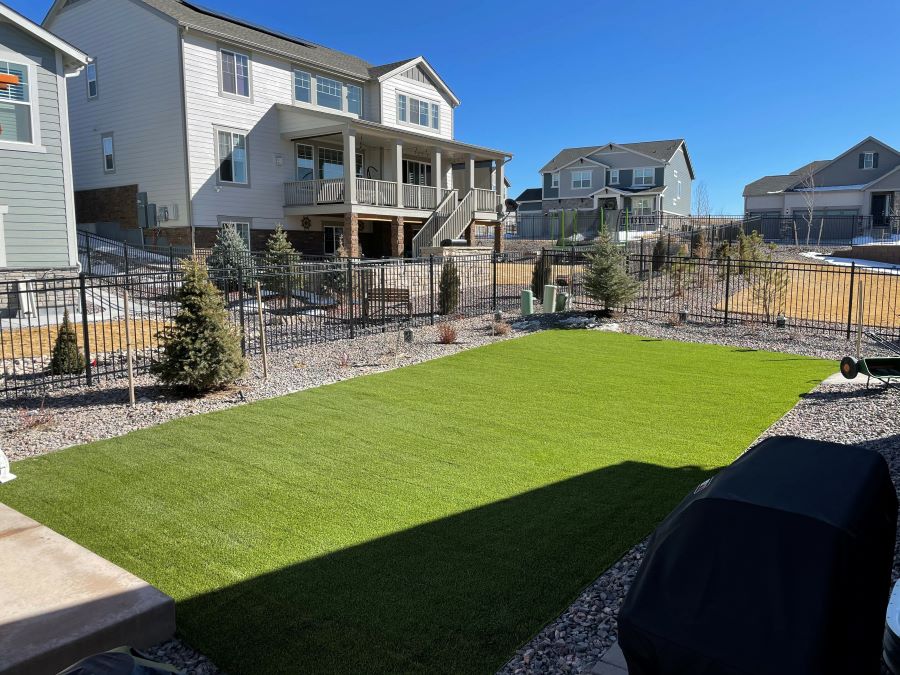
If the possibility of heat retention is taken into consideration, synthetic grass presents a practical and beautiful landscaping option for Colorado’s hot environment. Even though artificial turf can get considerably hotter than real grass in direct sunlight, there are ways to counteract this and maintain a safe and comfortable atmosphere. Proper material selection, shade incorporation, and cooling procedures allow homeowners to get the benefits of synthetic grass without having to deal with uncomfortable temperatures. Making the best landscaping choice for your house will depend on your awareness of the unique requirements and environmental factors, just like with any other selection.
Contact NoCo Turf Co. for more information.